Struggling to speak up in meetings when dominant or louder colleagues talk over you? If some of your colleagues have (ahem) “big personalities”, or if you’re on the more introverted side, it can be difficult to make yourself heard in meetings. Knowing when – and how – to effectively cut into the conversation doesn’t always come easily. But if you don’t make that effort, you run the risk of getting drowned out and your contributions going unnoticed.
In this video, I go over some body language and verbal communication tips that will help you unapologetically break into the conversational flow and make yourself heard. I’ll warn you, though, you might need to shore up your courage to do this. But I have faith in you!
Embedded video not working? Click here to watch it directly on YouTube (remember to like and subscribe, of course). Prefer to read than watch? Scroll down for the full transcript.
TRANSCRIPT
Are your louder, shoutier colleagues drowning you out during meetings? I’ve got some tips to help you be heard.
Hello everyone, my name is Lauren Sergy, workplace communication and public speaking wonk, and this is Communication Q&A!
You’ve probably sat in at least one meeting where a couple of people end up dominating the conversation. They push their views forward aggressively, talk over other people, and generally take up all the air in the room.
It’s frustrating to deal with this when you have things to say, but can’t get a word in edgewise – especially if you are an introvert like Ibrahim, who wrote to me with the following question:
Hi Lauren,
I am an engineer for an oil and gas company and have been in my position for 2 years. In meetings, I find there are a few people who consistently speak over me. I’m an introvert and not a pushy sort, but I find it difficult to contribute over the other more aggressive people in the room. How can I make myself heard in these meetings? I do not want to shout.
Thank you,
Ibrahim
Ibrahim, what you’ve described is a common workplace communication issue. Now I can’t get super precise about your situation without getting to watch one of your meetings or getting a lot more info from you. BUT, based on my experience with this sort of thing and from working with a lot of introverts (not to mention being one myself), I do have some tips that will help you – and anyone struggling to be heard in meetings – cut through the noise and get your point across.
One – Sit tall and make direct, sustained eye contact.
Body language counts for a lot when you’re trying to claim your place in a conversation. Sit tall – avoid slouching back or down in your chair – then orient yourself towards the person you are speaking to and make direct eye contact with them. Don’t look down at your papers!
It can be helpful to make eye contact with the person who is doing the most “talking over” as you cut in, and once people are listening to you, you can move your eye contact to others in the room.
Two – Make your point in direct, concise language.
In order to cut through the noise, you need to speak in short, punchy statements that capture people’s attention. Lead with your point or with your conclusion instead of building up to it.
Let’s say you wanted to make a strong point about why your company shouldn’t be used a certain material in an engineering application. Typically, people build up to their points by saying something like this: “I’ve gone through 5 years of past project reports, and based on both the cost of Fibrocast and how quickly it wears down, we can’t continue using it for these applications”.
Yes, it’s polite and not too pushy or aggressive, but it’s also wordy and it takes too long to get to the point. In journalist speak, you’ve buried the lede. If you have people who are dominating the conversation, speaking like this is NOT going to cut through their noise.
Instead, you can lead with the most important information, and make it short and sharp – like this:
“Fibrocast is expensive and wears down quickly. I have 5 years of data on that right here.”
That second statement – leading with a punchy, direct point – has more impact than the first, gentler statement. Speaking this way can snap people out of their stupor and helps draw attention away from the loudmouths and towards you. Once you’ve captured people’s attention, you’ll have an opening where you can then expand on that point.
If you aren’t use to speaking this way, it will feel uncomfortable at first – maybe even a bit aggressive. The secret to doing without being rude is your tone – stay neutral and objective. Avoid any hint of frustration, anger, or irritation. That way you can be direct without being rude.
Tip number three: make sure you enunciate clearly and speak with a firm, confident tone.
Speaking too fast, mumbling, or having a weak tone to your voice not only makes it difficult for people to hear or understand you, it also makes you sound uncertain.
This gives the impression that what you’re trying to say is unimportant, and others will continue speaking over you. So sit up straight (again – avoid slumping, this helps with your vocal strength as well as your physical presence), speak slowly (about the pace I’m speaking at right now), and be sure to enunciate. If you want help with enunciating and speaking clearly, I’ve got a video linked down below that will help you out.
I hope this helps you rise above your noisy co-workers, Ibrahim. And to everyone watching, these tips are useful for being heard in just about any situation, so don’t be afraid to try them out for yourself! Thanks for joining us, and I’ll see you on the next Communication Q&A.
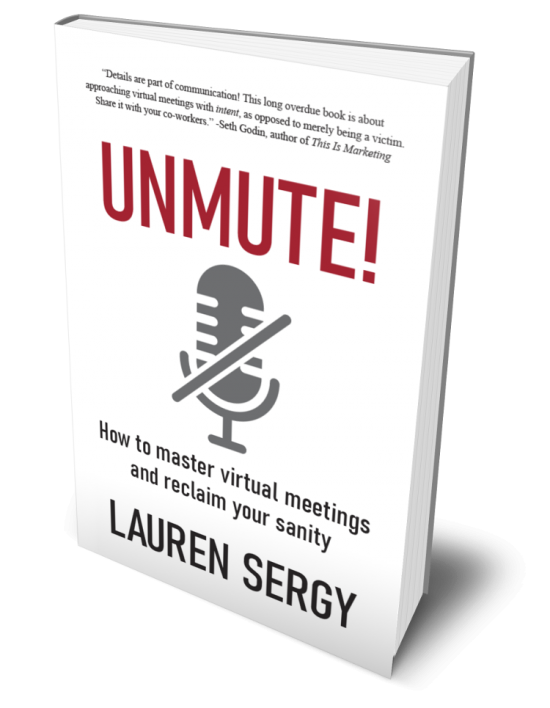
Lauren Sergy is a public speaking and workplace communication expert. She has worked with leaders and professionals in Canada, the US, and beyond, including Cargill, 3M, Service Canada, McGill University, and more. She is the author of The Handy Communication Answer Book and UNMUTE!.